 | ||||
 Unsubscribe | EWN Support | Register | ||||
QLD Severe Weather Warning: Damaging Winds & Heavy Rain


QLD Severe Weather Warning: Heavy Rain & Damaging Winds
| ||||
| ||||
Unsubscribe | EWN Support | Register | ||||
SCAMwatch email alert: Immigration scam targets migrants [SEC=UNCLASSIFIED]
The ACCC and the Department of Immigration and Border Protection (DIBP) have been getting reports of scammers claiming to be government officials. The scammers call migrants and temporary visa holders and threaten them with deportation supposedly because of problems with their immigration paperwork or visa status.
Scammers may try to pressure you by calling repeatedly and harassing you, even threatening to send the police to your house – but if you give your money to a scammer you will never see it again. The DIBP has confirmed that it does not ask for any payment of fines or penalties by telephone.
Be on guard, if you receive a phone call from someone threatening you with deportation and asking you to pay a fee, hang up and do not respond. If in doubt, don't use any contact details provided by the caller - look up the government department or organisation yourself in the phone book or online and phone or email them.
How these scams work
- You receive a call out of the blue from someone claiming to be from the "Department of Immigration".
- You may be left a message on your answering machine asking you to ring a number.
- The caller will claim that you have issues with your immigration forms or visa status.
- The scammer will tell you that in order to resolve the matter you will need to pay a fee or fine.
- The caller may try to get information from you like your passport details, date of birth or bank information.
- The caller may claim the police will come to your door and arrest you if you do not pay the fee or fine immediately.
- The caller may even offer to send a taxi to your house to take you to the nearest post office to make a payment via wire transfer or other electronic payment method.
- If you send any money via wire transfer, you will never see it again – it's nearly impossible to recover money sent this way.
- If you provide any personal information, the scammer may use it to commit identity theft.
Protect yourself
- If you receive a phone call out of the blue from someone claiming to be from the DIBP telling you that you will be deported unless you pay a fine, hang up.
- If you have any doubts about the identity of any caller who claims to represent a government department, contact the department directly. Don't rely on numbers, email addresses or websites provided by the caller – find them through an independent source such as a phone book or online search.
- Never send any money via wire transfer to anyone you do not know or trust.
- Never give your personal information or bank account details over the phone unless you made the call and the phone number came from a trusted source. If you think you have provided your details to a scammer, contact your bank or financial institution immediately.
Report
You can report immigration fraud matters to the Department of Immigration and Border Protection through their Immigration Dob-In Service.
You can report scams to the ACCC via the SCAMwatch report a scam page or by calling 1300 795 995.
More information
Stay one step ahead of scammers, follow @SCAMwatch_gov on Twitter.
If you no longer want to receive SCAMwatch email alerts, please unsubscribe on the SCAMwatch website.
SCAMwatch email alert: Telephone calls alleging fake arrest warrants used to scam money [SEC=UNCLASSIFIED]
Telephone calls alleging fake arrest warrants used to scam money
April 2015: SCAMwatch is warning consumers to be aware of calls from scammers falsely claiming to be from the Commonwealth Director of Public Prosecutions (CDPP) or Australian Tax Office (ATO).
Scammers have recently been calling Australians telling them that there is a warrant out for their arrest. Many people have reported to SCAMwatch that messages have been recorded on their answering machines asking them to call back later. The telephone number provided is 0261003027 and they ask you to call during office hours to discuss the matter further. However, the telephone number has no connection with the Commonwealth Director of Public Prosecutions, Australian Taxation Office or any other state or commonwealth department.
The scammers may spin a range of stories about why an arrest warrant has been issued, including that you have failed to pay taxes.
Scammers typically ask for money to be sent via wire transfer as it's nearly impossible to recover money sent this way. They may also ask for people's financial and other personal details to access their money and use this information to commit other scams.
Be on guard, if you receive a phone call from someone saying you have an arrest warrant and asking you to pay a fee, hang up and do not respond. If in doubt, don't use the contact details provided - look up the government department or organisation yourself in the phone book or online and phone or email them.
How these scams work
You receive a call out of the blue from someone claiming to be from the Commonwealth Director of Public Prosecutions or the Australian Taxation Office.
The call may sound like it is an automated message with an American accent.
The caller or sender will claim that you have an arrest warrant for some reason.
The scammer will ask you to telephone a number that appears to be Australian but is likely to be a VOIP number.
The number reported is 02 6100 3027. This is not the correct number for the CDPP.
The scammer will tell you that in order to resolve the matter you will need to pay a fee.
You may also be asked to provide your bank account details or other personal information so they can confirm they have the right person.
If you send any money via wire transfer, you will never see it again – it's nearly impossible to recover money sent this way. You will also never receive the promised rebate or refund.
If you provide your bank account details or other personal information, the scammer may use it to commit identity theft or to steal your money.
Protect yourself
If you receive a phone call or email out of the blue from someone claiming to be from the Commonwealth Department of Public Prosecutions or Australian Taxation Office telling you about an arrest warrant, hang up.
If you receive a message on your phone asking you to telephone 02 6100 3027, delete the message.
If you have any doubts about the identity of any caller who claims to represent a government department, contact the body directly. Don't rely on numbers, email addresses or websites provided by the caller – find them through an independent source such as a phone book or online search.
The CDPP is advising people to be vigilant when receiving phone calls of this nature and if in doubt about the authenticity of a call that you receive from the CDPP, contact them on one of the publically listed phone numbers or email inquiries@cdpp.gov.au.
Never send any money via wire transfer to anyone you do not know or trust.
Never give your personal, credit card or online account details over the phone unless you made the call and the phone number came from a trusted source. If you think you have provided your account details to a scammer, contact your bank or financial institution immediately.
Report
You can report scams to the ACCC via the SCAMwatch report a scam page or by calling 1300 795 995.
More information
See advice at the Commonwealth Director of Public Prosecutions website.
Stay one step ahead of scammers, follow @SCAMwatch_gov on Twitter.
You have received this email because you have subscribed to receive SCAMwatch radar alerts on scams targeting Australians. These alerts are issued by the Australian Competition and Consumer Commission and can be viewed on its SCAMwatch website http://www.scamwatch.gov.au.
If you have any doubts about an email's source, verify the sender by independent means - use their official contact details to check the email is legitimate before clicking on links or opening attachments.
If you no longer want to receive SCAMwatch email alerts, please unsubscribe on the SCAMwatch website.
SCAMwatch email alert: Telephone calls alleging fake arrest warrants used to scam money [SEC=UNCLASSIFIED]
Telephone calls alleging fake arrest warrants used to scam money
April 2015: SCAMwatch is warning consumers to be aware of calls from scammers falsely claiming to be from the Commonwealth Director of Public Prosecutions (CDPP) or Australian Tax Office (ATO).
Scammers have recently been calling Australians telling them that there is a warrant out for their arrest. Many people have reported to SCAMwatch that messages have been recorded on their answering machines asking them to call back later. The telephone number provided is 0261003027 and they ask you to call during office hours to discuss the matter further. However, the telephone number has no connection with the Commonwealth Director of Public Prosecutions, Australian Taxation Office or any other state or commonwealth department.
The scammers may spin a range of stories about why an arrest warrant has been issued, including that you have failed to pay taxes.
Scammers typically ask for money to be sent via wire transfer as it's nearly impossible to recover money sent this way. They may also ask for people's financial and other personal details to access their money and use this information to commit other scams.
Be on guard, if you receive a phone call from someone saying you have an arrest warrant and asking you to pay a fee, hang up and do not respond. If in doubt, don't use the contact details provided - look up the government department or organisation yourself in the phone book or online and phone or email them.
How these scams work
You receive a call out of the blue from someone claiming to be from the Commonwealth Director of Public Prosecutions or the Australian Taxation Office.
- The call may sound like it is an automated message with an American accent.
- The caller or sender will claim that you have an arrest warrant for some reason.
- The scammer will ask you to telephone a number that appears to be Australian but is likely to be a VOIP number.
- The number reported is 02 6100 3027. This is not the correct number for the CDPP.
- The scammer will tell you that in order to resolve the matter you will need to pay a fee.
- You may also be asked to provide your bank account details or other personal information so they can confirm they have the right person.
- If you send any money via wire transfer, you will never see it again – it's nearly impossible to recover money sent this way. You will also never receive the promised rebate or refund.
- If you provide your bank account details or other personal information, the scammer may use it to commit identity theft or to steal your money.
Protect yourself
- If you receive a phone call or email out of the blue from someone claiming to be from the Commonwealth Department of Public Prosecutions or Australian Taxation Office telling you about an arrest warrant, hang up.
- If you receive a message on your phone asking you to telephone 02 6100 3027, delete the message.
- If you have any doubts about the identity of any caller who claims to represent a government department, contact the body directly. Don't rely on numbers, email addresses or websites provided by the caller – find them through an independent source such as a phone book or online search.
- The CDPP is advising people to be vigilant when receiving phone calls of this nature and if in doubt about the authenticity of a call that you receive from the CDPP, contact them on one of the publically listed phone numbers or email inquiries@cdpp.gov.au.
- Never send any money via wire transfer to anyone you do not know or trust.
- Never give your personal, credit card or online account details over the phone unless you made the call and the phone number came from a trusted source. If you think you have provided your account details to a scammer, contact your bank or financial institution immediately.
Report
You can report scams to the ACCC via the SCAMwatch report a scam page or by calling 1300 795 995.
More information
See advice at the Commonwealth Director of Public Prosecutions website.
Stay one step ahead of scammers, follow @SCAMwatch_gov on Twitter.
SCAMwatch email alert: Telephone calls alleging fake arrest warrants used to scam money [SEC=UNCLASSIFIED]
Telephone calls alleging fake arrest warrants used to scam money
April 2015: SCAMwatch is warning consumers to be aware of calls from scammers falsely claiming to be from the Commonwealth Director of Public Prosecutions (CDPP) or Australian Tax Office (ATO).
Scammers have recently been calling Australians telling them that there is a warrant out for their arrest. Many people have reported to SCAMwatch that messages have been recorded on their answering machines asking them to call back later. The telephone number provided is 0261003027 and they ask you to call during office hours to discuss the matter further. However, the telephone number has no connection with the Commonwealth Director of Public Prosecutions, Australian Taxation Office or any other state or commonwealth department.
The scammers may spin a range of stories about why an arrest warrant has been issued, including that you have failed to pay taxes.
Scammers typically ask for money to be sent via wire transfer as it's nearly impossible to recover money sent this way. They may also ask for people's financial and other personal details to access their money and use this information to commit other scams.
Be on guard, if you receive a phone call from someone saying you have an arrest warrant and asking you to pay a fee, hang up and do not respond. If in doubt, don't use the contact details provided - look up the government department or organisation yourself in the phone book or online and phone or email them.
How these scams work
You receive a call out of the blue from someone claiming to be from the Commonwealth Director of Public Prosecutions or the Australian Taxation Office.
- The call may sound like it is an automated message with an American accent.
- The caller or sender will claim that you have an arrest warrant for some reason.
- The scammer will ask you to telephone a number that appears to be Australian but is likely to be a VOIP number.
- The number reported is 02 6100 3027. This is not the correct number for the CDPP.
- The scammer will tell you that in order to resolve the matter you will need to pay a fee.
- You may also be asked to provide your bank account details or other personal information so they can confirm they have the right person.
- If you send any money via wire transfer, you will never see it again – it's nearly impossible to recover money sent this way. You will also never receive the promised rebate or refund.
- If you provide your bank account details or other personal information, the scammer may use it to commit identity theft or to steal your money.
Protect yourself
- If you receive a phone call or email out of the blue from someone claiming to be from the Commonwealth Department of Public Prosecutions or Australian Taxation Office telling you about an arrest warrant, hang up.
- If you receive a message on your phone asking you to telephone 02 6100 3027, delete the message.
- If you have any doubts about the identity of any caller who claims to represent a government department, contact the body directly. Don't rely on numbers, email addresses or websites provided by the caller – find them through an independent source such as a phone book or online search.
- The CDPP is advising people to be vigilant when receiving phone calls of this nature and if in doubt about the authenticity of a call that you receive from the CDPP, contact them on one of the publically listed phone numbers or email inquiries@cdpp.gov.au.
- Never send any money via wire transfer to anyone you do not know or trust.
- Never give your personal, credit card or online account details over the phone unless you made the call and the phone number came from a trusted source. If you think you have provided your account details to a scammer, contact your bank or financial institution immediately.
Report
You can report scams to the ACCC via the SCAMwatch report a scam page or by calling 1300 795 995.
More information
See advice at the Commonwealth Director of Public Prosecutions website.
Stay one step ahead of scammers, follow @SCAMwatch_gov on Twitter.
Southeast QLD Severe Thunderstorm Warning: Heavy Rain
| ||||
| ||||
Unsubscribe | EWN Support | Register | ||||
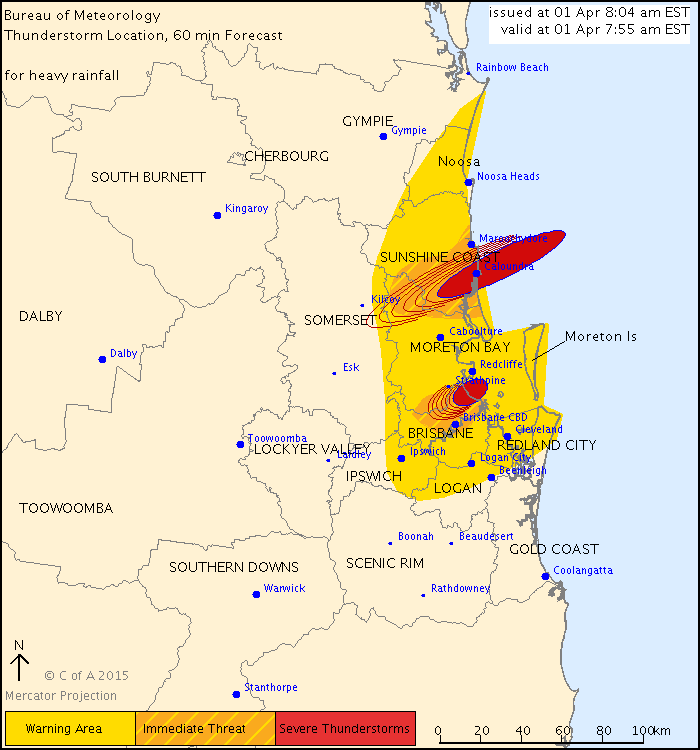
QLD Severe Thunderstorm Warning: Heavy Rain, Damaging Winds
| ||||
| ||||
Unsubscribe | EWN Support | Register | ||||
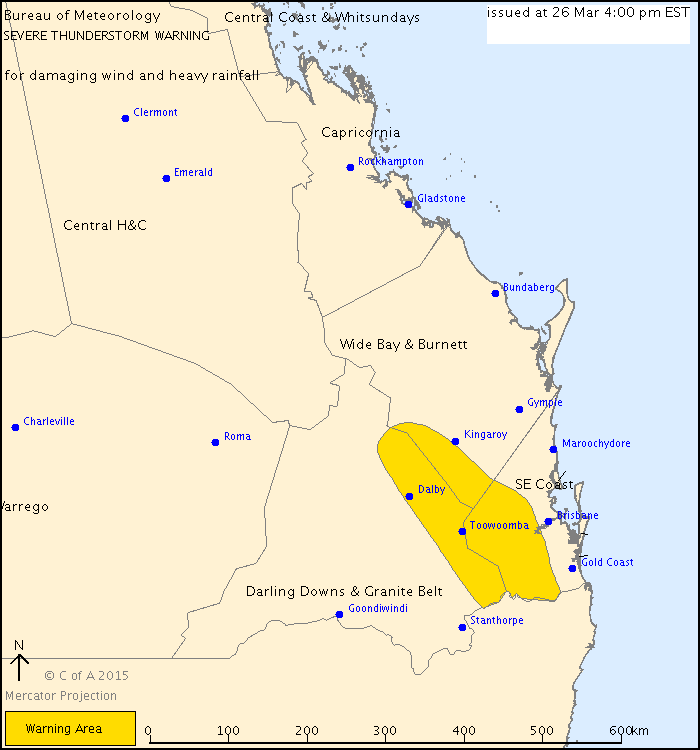
QLD Severe Thunderstorm Warning: Heavy Rain
| ||||
| ||||
Unsubscribe | EWN Support | Register | ||||

Southeast QLD Severe Thunderstorm Warning: Heavy Rain
| ||||
| ||||
Unsubscribe | EWN Support | Register | ||||
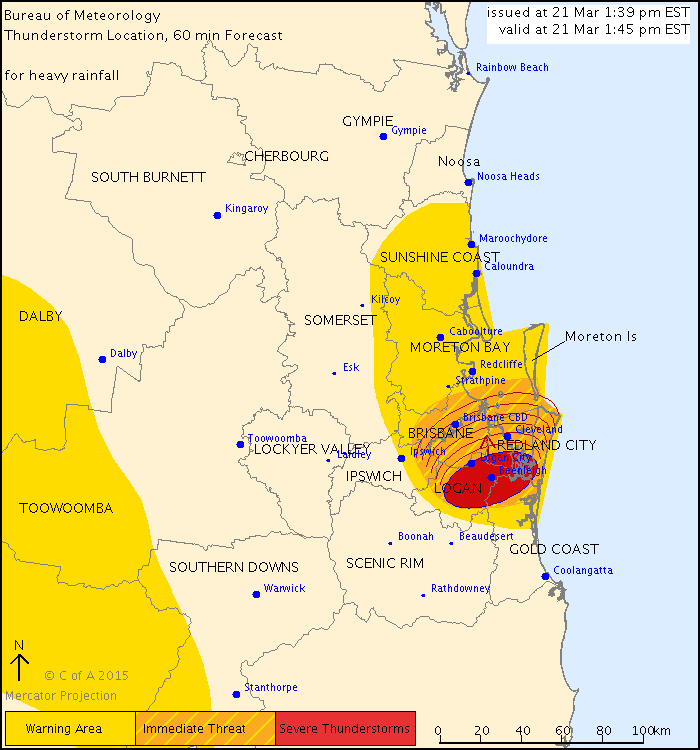
QLD Severe Thunderstorm Warning: Heavy Rain, Damaging Winds
| ||||
| ||||
Unsubscribe | EWN Support | Register | ||||
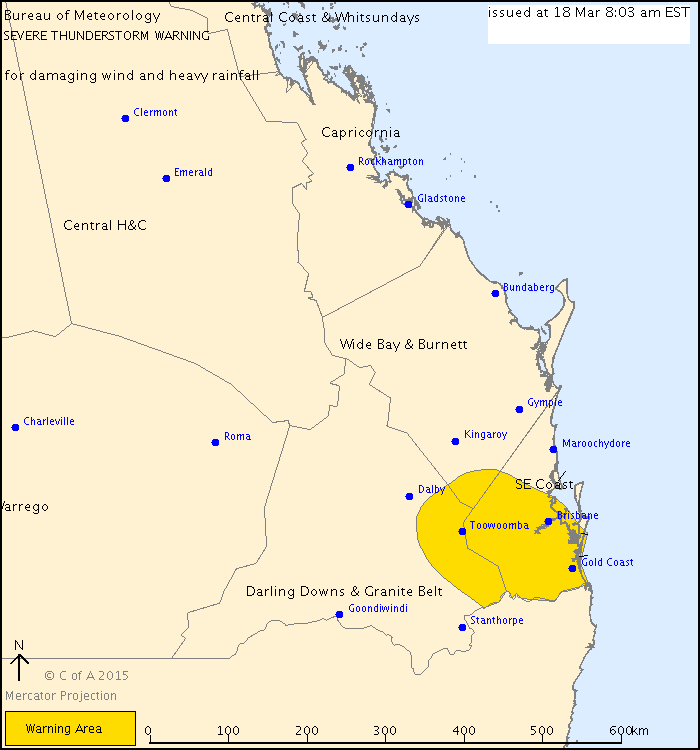
SCAMwatch email alert: Beware of NBN scams [SEC=UNCLASSIFIED]
17 March 2015: SCAMwatch is warning consumers and businesses to be aware of NBN-related scams seeking to get your personal details or asking you to buy equipment you don't need.
As the rollout of the National Broadband Network (NBN) progresses, you may receive legitimate materials from NBN Co and telecommunications service providers about what you need to do when the NBN comes to your area. Unfortunately, scammers may take advantage of the NBN rollout, using it as an excuse to contact consumers and small businesses. Scammers may call or email with false claims that they need personal details, such as credit card details, to allow access to the NBN. Some scammers may also tell consumers that they need to buy new equipment to use services over the NBN.
Scammers often use major government programs or announcements like the NBN to trick people into handing over their money or personal details. Scammers may pretend to be from NBN Co, a government agency, or a telecommunications provider to sound legitimate. They may spin a range of stories to make their story sound real, such as claiming that personal information such as credit card details is necessary to get access to services over the NBN.
Scammers typically ask for people's financial and other personal details to access their money and commit identity theft.
NBN Co is the company responsible for the NBN rollout. It is a wholesale network provider and does not provide retail services to consumers. It is unlikely that NBN Co will ask consumers for personal bank or credit card details. You should only give your personal bank or credit card details if you know who you are talking to and understand the reason you are providing these details.
If you are unsure about what you need to do to switch to services over the NBN, you should contact your preferred telecommunications service provider using the number in the telephone directory or on their official website.
There are a limited number of circumstances where you may need new equipment when you switch to services over the NBN – for example if you have a household or medical alarm or if you need a new modem or router. Do not purchase any new equipment before speaking with your preferred telecommunications service provider and/or your equipment provider.
Be on guard, you may receive a phone call or email from someone asking for your personal or banking details in order get services over the NBN at your home or business. If you are approached by someone purporting to offer the NBN in this way, hang up and stop contact– the person on the other end may be a scammer. The best approach is to call your preferred telecommunications service provider using the number they list in the telephone directory or on their official website.
How these scams work
- You receive a call, email or knock at the door out of the blue from someone claiming to be from the NBN, a government department or business such as a telecommunications service provider.
- The caller or sender will claim that, because of the NBN, you must provide personal information. You may be asked to provide your bank account details or other personal information.
- If you provide your bank account details or other personal information, the scammer may use it to commit identity theft or to steal your money.
- Alternatively, the caller may tell you that you need to buy new equipment because your existing equipment is incompatible with the NBN and ask you to purchase equipment.
Protect yourself
- Know who you are talking to: If you have any doubts about the identity of any caller who claims to represent a business, organisation or government department, contact the body directly. Don't rely on numbers, email addresses or websites provided by the caller – find them through an independent source such as a phone book or online search.
- Protect your personal information: Never give your personal, credit card or online account details over the phone unless you made the call and the phone number came from a trusted source.
- Think twice before buying: Before purchasing any new equipment for the NBN, make sure you do your own research. Contact your service provider directly and shop around to make sure new equipment is actually required.
- If you think you've been scammed, report it: If you think you have provided your account details to a scammer, contact your bank or financial institution immediately.
Report
You can report scams to the ACCC via the SCAMwatch_report_a_scam_page or by calling 1300 795 995.
More information
Stay one step ahead of scammers, follow @SCAMwatch_gov on Twitter.
You have received this email because you have subscribed to receive SCAMwatch radar alerts on scams targeting Australians. These alerts are issued by the Australian Competition and Consumer Commission and can be viewed on its SCAMwatch website http://www.scamwatch.gov.au.
If you have any doubts about an email's source, verify the sender by independent means - use their official contact details to check the email is legitimate before clicking on links or opening attachments.
If you no longer want to receive SCAMwatch email alerts, please unsubscribe on the SCAMwatch website.
Subscribe to:
Posts (Atom)